
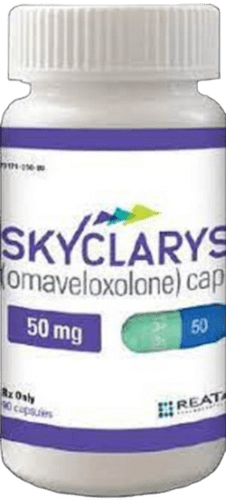
There is a treatment available for people with my condition. It was fast-tracked by the Food and Drug Administration (FDA) in America and has been available there since Summer 2023. The UK medicines regulator (MHRA) approved Omaveloxolone (Skyclarys) in April 2025. It remains unavailable to NHS users in the UK. But why?
There is a fundamental difference between drug approval in the US and the UK. Here, new drugs purchased using public funds have a fourth hurdle to overcome. In order to be approved for distribution through the NHS, (National Health Service) new drugs have to be approved by an agency called NICE (National Institute of Clinical Excellence) to ensure they are cost-effective. That’s when the wheels fell off for Skyclarys. Unexpectedly, and without explanation, the pharmaceutical company withdrew it from this assessment.
In the middle of all this are people; ordinary people. People who been waiting years for an effective treatment, people who know their time is running out, people like me. AtaxiaUK are valiantly orchestrating a heartfelt challenge. Raising the profile of our condition and the unfairness of being unable to access OMAV in UK by writing an open letter (signed by over 10,000 people) to the Secretary of State for Health and Social Care requesting interim access to Skyclarys for FA patients in the UK. They presented the case at the All-Party Parliamentary Group on Rare Disease, questioning the government’s commitment to improve access to specialist care, treatments and drugs for rare conditions such as FA.
Raising awareness and holding decision-makers to account is very important, but look closer, this is all about money. Under rules unchanged since 1999, NICE considers a medicine costing between £20,000 and £30,000 for every extra year of good-quality life it provides a patient to represents good value for money for the NHS. In the US, Skyclarys costs $300,000 per year. The perceived cost-effectiveness and the actual cost of the drug do not even come close to meeting. That’s the real problem.

Why are new medicine prices so high? New medicines cost money to develop, research and test. They go through many stages over several years before they even get to the market. Many drugs don’t make it, their costs are rolled into the prices of those few that do. The medicines then have marketing, manufacture and distribution costs. The final price can also reflect demand; it’s economics, the smaller the target group of consumers, the higher the price you can charge for your product. Pharmaceutical companies are businesses and have shareholders who are looking to maximise their return on their investment. But $300,000 per year?
There are benefits. Effective preventative measures always reduce healthcare costs. Not just by avoiding stays in hospital, but reducing the need for care at home, Social Security benefits and the need for drab and overpriced mobility equipment. As more people are able to work and pay taxes for longer, workforce productivity increases. Everyone wins: As long as the price is right. We consumers get our life-changing medicine and an efficient NHS hits its targets, the benevolent pharmaceutical company staff feel good about their bonuses and their shareholders get nice dividends. Research shows that some patient groups even get rewarded by pharmaceutical companies for playing their part in this game.
I wasn’t surprised that the UK government has its snout in this trough too. According to a recent article in the Guardian, drugmakers pay back a chunk of their UK revenues to the government. At the moment, companies repay about a quarter of revenues, compared with rebate rates of 5.7% in France and 7% in Germany. If much of this revenue comes from the publicly funded NHS and the government makes more profit from higher medicine prices. Surely this is deeply unethical?

This is what out-of-control Capitalism looks like; profits before people – pure, unsustainable greed. The CEO of Astrazenaca has demanded that the UK raise their thresholds for drug cost-effectiveness, and other pharmaceuticals are threatening to pull investment out of the UK. Some have already done so (another Brexit benefit). With its ridiculous pantomime traditions, our political system in the UK is not fit to challenge them. It’s no better over in the US. Trump wants to reign in Big Pharma, but only to tip the scales in his favour.
Capitalism just does not work for disabled people. Jobs, housing, education, transport, we’re always left out. In my book, Disability Is Other People: My Superhero Story, I look at hope, the Institutional fantasy of curing disability once and for all, and wonder what a life without disability would really be like. Would it complete me?
Skyclarys is a work in progress, but it’s the best (and only) option we have. According to the European medical agency (EMA), it is not fully understood how Skyclarys operates, but the effect it produces can slow down the progression of FA. That there was no other treatment available helped influence the EMA approval process. Although initial patient trials were limited to people under 40 who were still able to walk, Skyclarys’ corporate website, confirms it has now been prescribed to more than 2000 adults aged 18 to 83 globally. You have to take it for the rest of your life, a wet dream for pharmaceutical companies.
From what I hear from my peers around the world, Skyclarys has mixed results. It is a treatment, not a cure and trials to perfect and understand it are ongoing. Like any drug, it can have side effects. Personally, I would relish the chance to stop my condition from progressing further, thanks to sky-high prices I don’t even have a chance to slow it down with Skyclarys.
Richard C Brown MBE – November 2025
