
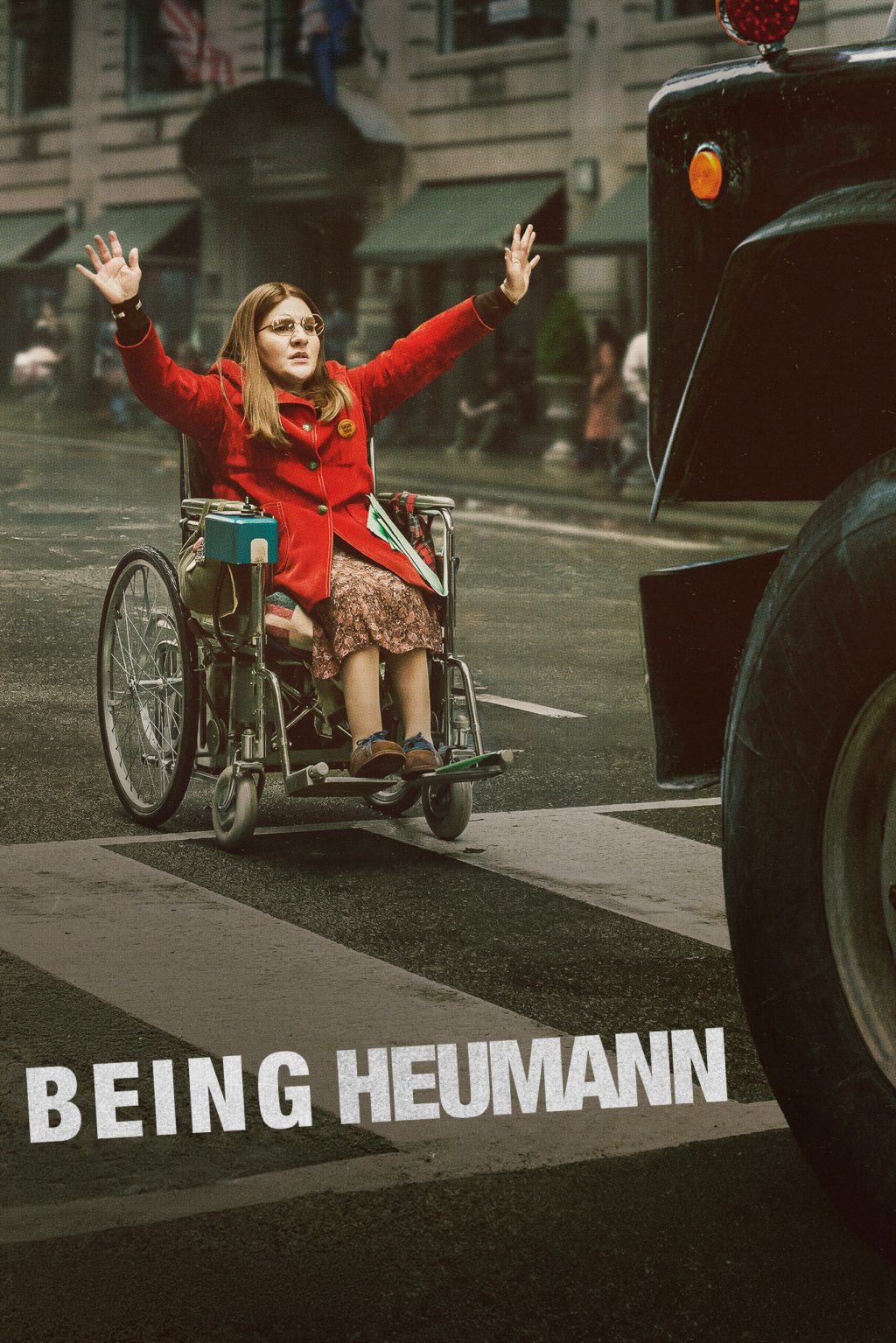
Judith Heumann, known as the mother of the Disability Rights movement, passed away aged 75 in March 2023. This documentary, with by Oscar-winning director Siân Heder is an adaptation of her 2020 memoir: Being Heumann: An Unrepentant Memoir of a Disability Rights Activist it tells the story of shows how disabled Americans began the fight for equality in the 1970’s. It also comes with a warning for all of us.
The documentary opens with a close-up shot of wet, noisy and busy road unrolling in front of us. Passengers by Iggy Pop plays brightly in the background. Occasionally we see a pair of feet marching in front of us. We urge the camera to look up, give us daylight, sky, freedom, but this is the lowly view a wheelchair user has when navigating a busy street. Judy is making her way along a busy street in rush-hour, clutching her handbag to her lap with one hand, piloting her power-chair with the other.
Operating a wheelchair in a moving crowd is challenging enough, people stopping abruptly can easily cause a collision. A pothole or a stone can lock up a front wheel and tip you out at any moment. Judy’s way is soon blocked by steep curb. Without hesitating, she swings out into the road, stopping traffic behind her as she continues down the street. Defiantly giving the finger to an impatient bus driver who follows her closely, honking his horn. This opening scene gives us the very clear understanding that Judy does not consider herself to be a victim or a burden, deserves the same rights as people around her and is not afraid to claim them.
The documentary begins in 1977, Judy Heumann is a disability rights activist, wheelchair user, and polio survivor protesting against the delayed implementation of Section 504 of the Rehabilitation Act, legislation protecting access rights for disabled persons in the US. The Rehabilitation Act had been signed by Richard Nixon four years earlier, but concerns about costs had kept Section 504 in limbo, lacking the necessary implementation signature of the Secretary of Health, Education, and Welfare (HEW). When conventional protest fails, Heumann and a community of over 150 disabled activists start a sit-in at the regional HEW offices in San Francisco, refusing to leave the building until Section 504 is signed.
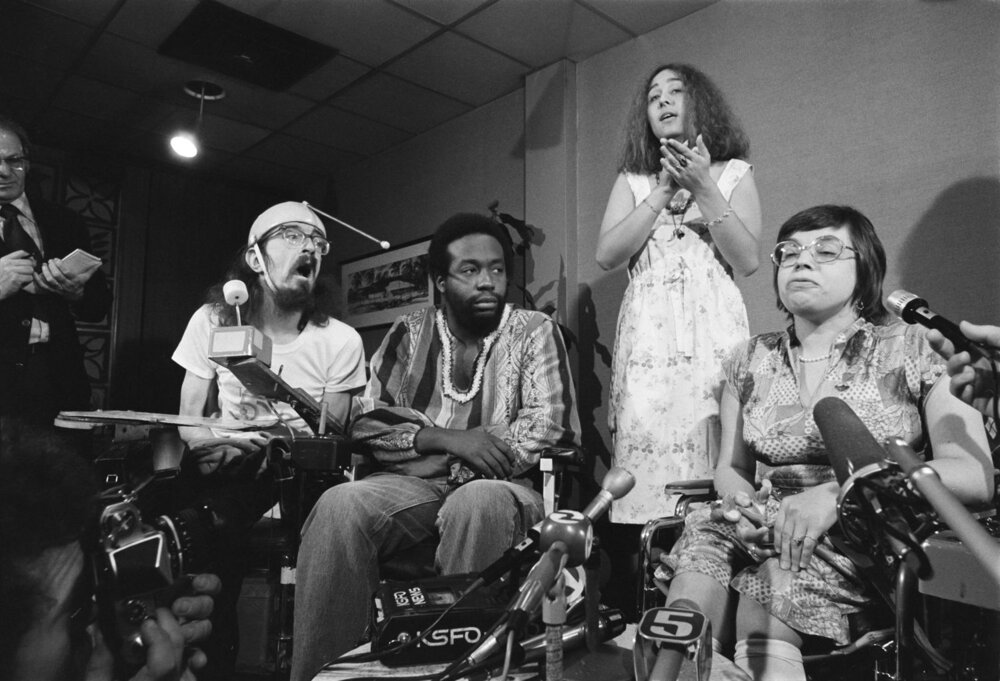
The occupation begins with heart-warming scenes of resilience and cooperation between people with different disabilities. The ambulant push and lift wheelchair users, wheelchair users guide the partially sighted and those with hearing impairments use sign language to communicate with the outside world when the phone lines in the occupied building are disconnected. Being Heumann is also an honest portrayal of the most intimate moments of disability that we don’t often see on screen.
The occupation quickly becomes an overnight stay. That might not occur to most people as a great problem, but for me, staying overnight in a public building with no facilities or equipment would be very difficult and I would start looking for excuses to go home. But where does that voice telling you to give up come from? Is it your own voice, or an echo of shame, doctors or family – other people? Recently, I was trying to outline the premise of my book, Disability is Other People, to my new carer; it reminded her of a story that her father in Sri Lanka used to tell.
There were a group of frogs living in the forest. One day, the smallest frog decided he was going to climb the tallest tree. No frog had ever done such a thing before. He told his friends and family what he intended and started climbing. He was halfway up when he began to tire. He started to question himself and his decision to climb the tree in the first place. He could hear shouting from far below . He looked down to see his friends and family cheering him on. They were waving and punching the air. They believed in him. He couldn’t make out exactly what they were saying. After all, he was quite high up and frogs don’t have ears!
This changed everything, he would not give up, he would get to the top for his friends. With tears welling in his eyes, he struggled on, using strength he knew he had. Finally, he reached the top and looked down. His friends were still cheering wildly far below. He was a hero. When he got back to the ground, his friends and family hugged him tightly and told him how brave he was. He learned the next day that while he was climbing, everyone was actually trying to tell him was that it was too dangerous for such a small frog, to come back immediately, that he was foolish to even try to climb the tree.
The message is: never let other people tell you what you can and can’t do! This is also a theme in the documentary (and my book!) Judy is warned that “some of the protesters can’t stay overnight because they have medication that must be chilled, ventilators that need to be monitored or will need their bodies turning during the night.” We already know from the first scene that discomfort and hardship do not deter Judy. She replies “(they) know their body better than anyone else. it has to be their decision.” This shows great respect and understanding that disabled people have different abilities.
I was also struck by the variety of methods the campaigners used to get their message across. When picketing the HEW Secretary’s home in a suburban area of Washington DC in the early hours, the protesters sing gentle spiritual protest songs to announce their presence. This is all they need to do. In Washington DC, after strong police provocation, they use their wheelchairs to repeatedly smash into the state building until allowed inside. This is how to protest. Careful use of the right methods at the right time.
After a few days with no breakthrough in sight, the occupation group threatens to fragment around the different disability identities within. Judy uses the Social Model of Disability to keep focus. She reminds everyone that other people’s attitudes, behaviours, and ableism are what actually disabling all of them and that inequality is a shared experience. This point is made strongly when local Black Panthers provide food for their fellow protesters for the duration of the occupation. The Bill was signed after almost a month, making this the longest sit-in at a federal building in American history.
Some of the victorious protesters realise that they can’t return to their lonely, institutionalised lives. Just as in the 2020 Oscar-nominated documentary Crip Camp (attended every summer from 1956 to 1965 by a young Judy Heumann), the protesters were changed forever by just living with other disabled people. Judy was already a seasoned disability rights campaigner and the real work was only just beginning. The Americans with Disabilities Act would not pass into law in until 1990.
Judy continued to fight for disabled people, serving a special adviser to the Clinton and Obama administrations. The title of her 2019 TED Talk was: “Our fight for disability rights – and we’re not done yet!” The timing of this film a gives a stark warning. Last month, a federal judge dealt a blow to disability rights activists by agreeing to remove mentions of “integration” of people with disabilities from Section 504 regulations. Disability equality is a ongoing battle and without the constant energy of disabled people, we go backwards.
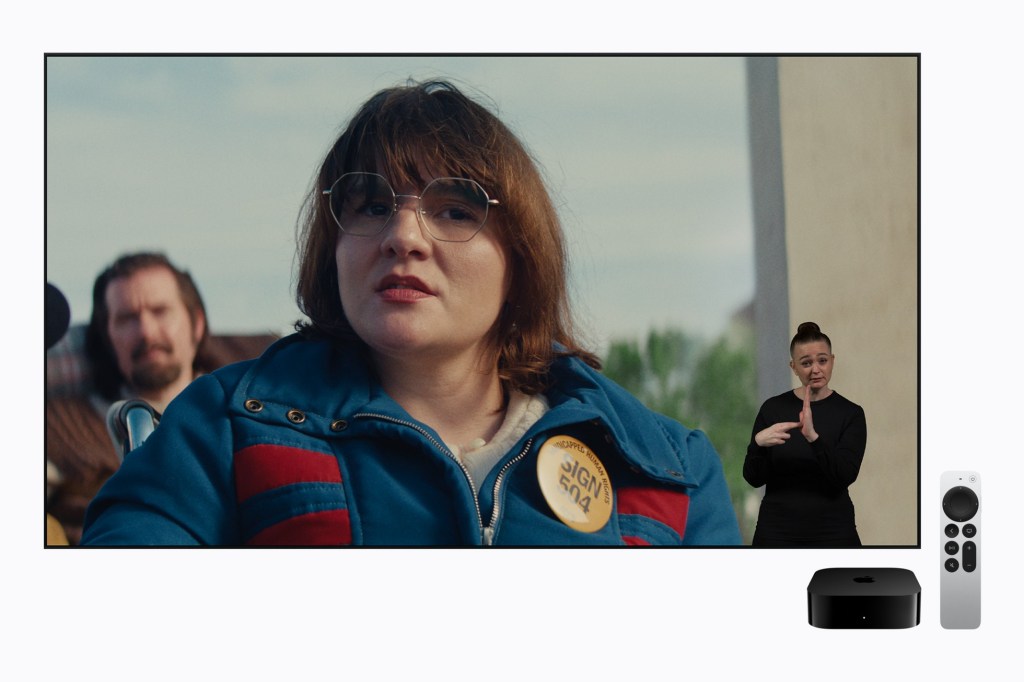
In April 2019, Heumann called for increased disabled representation in media. Accordingly, all of the actors in Being Heumann are disabled people. Underlining the importance of inclusivity to telling this story, this documentary features sign language interpretation in both American and British sign language. A first for producer Apple TV.
With the campaign to access Skyclarys within the FA community today, we really need more people like Judy. I received a comment on my open letter to the CEO of Biogen warning: “Just wait until we all turn up at their AGM.” What a wonderful image. The disability rights campaigners in America and the UK of the end of the 20th century may be gone, but their spirit is still with us.
Richard C Brown MBE – November 2026


Leave a Reply