
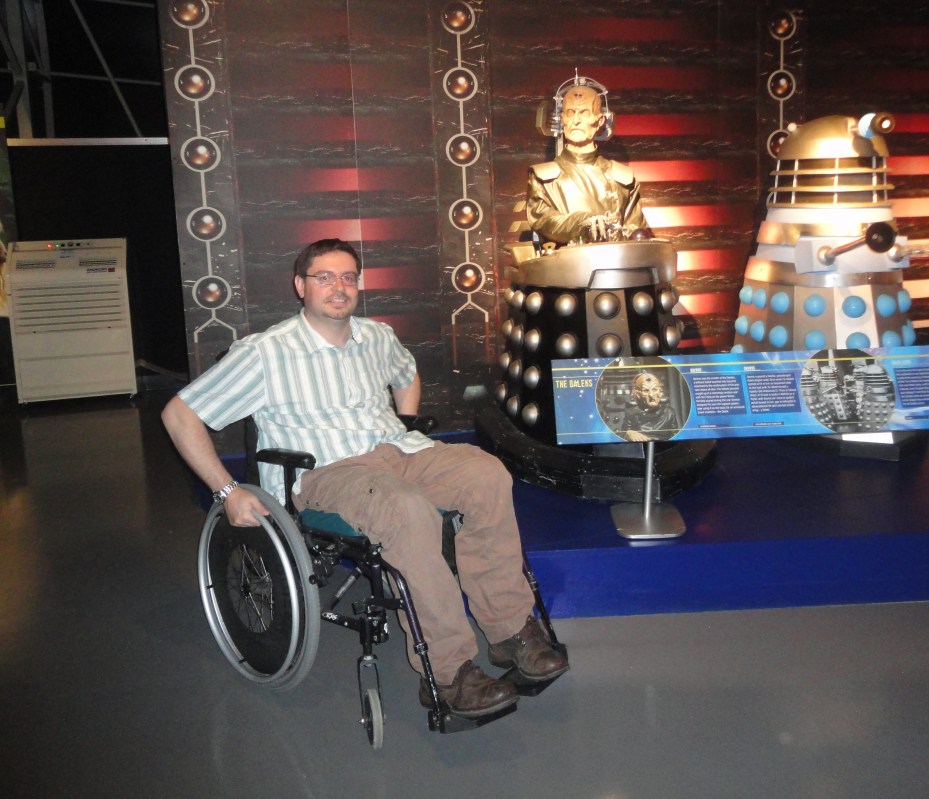
They say “never meet your heroes, you’ll only be disappointed.” They also say “never go back.” Don’t worry, I haven’t started time travelling. I’ve taken an opportunity to recapture some special memories from my childhood with my children.
To mark the program’s 60th anniversary, the entire collection of Doctor Who episodes from 1963 to 1996 have been made available on BBC iPlayer. Both my kids have been watching the new Doctor Who, our 14-year-old especially likes David Tennant (Doctor numbers 10 and 14). It was a win-win. I was very excited as I would be able to recapture my youth and for the kids would be able to build up their knowledge of the Whoniverse and for them to share something cool with their dad. Doctor Who has a massive fan base and is the U.K.’s longest running sci-fi series, consistently winning awards and fans throughout. Many of the earlier episodes were not archived and have had to be pieced together from sound recordings and with the aid of animation. People really love this show.
Sharing the films and tv I love with my kids is problematic. They never see them the same as I did when I watched them. The colourful and fast-moving Flash Gordon didn’t captivate them. After claiming it was ‘a classic’, Beetlejuice was a very hard watch. A notable exception was Gremlins, which my son loved as much as me. I had caught a few episodes of “retro Doctor Who” previously on the Syfy channel, and had remembered how like a lot of 70s and 80s science-fiction, the special effects hadn’t aged well. I hoped my kids would be able to overlook this and recognise their Doctors in mine.
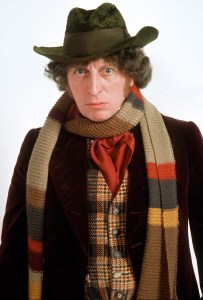
Doctor Who 1974-81
My Doctor
We started with Tom Baker’s Doctor in Genesis of the Daleks (1975). It’s a very dark story, with the Doctor having to decide whether or not to destroy the Daleks before they have chance to evolve into genocidal monsters. There is also a giant rocket being constructed by slaves.
OK, the Daleks looked a bit wobbly, but they were still terrifying. Clearly, viewers in 1975 were worried about the threat of missile attacks and still felt the threat of totalitarianism. As I feared, the kids saw it very differently. They focussed on the technical aspects, the special effects and the acting. They especially didn’t like the cliff-hanger format, where the doctor or one of his companions would find themselves in mild peril. Then you would have to watch the entire scene again the start of next episode.
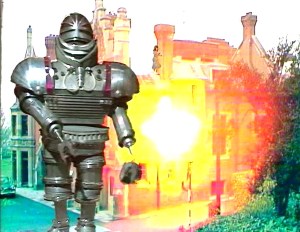
I tried valiantly to defend it all. The acting was not “Hollywood” standard, because science-fiction was a new genre back then and people were working with the available technology, it was very low-budget. They used an effect known as CSO or Colour Separation Overlay, which is a primitive greenscreen like process and often gave things an unnatural looking aura. I explained that we could probably recreate an episode by going to disused quarry with an iPhone today. I had to remind them that the cliff-hanger format to each episode was because they were week apart and atmosphere would build as you waited for the outcome. Nowadays you can binge watch instead.
As we ploughed through more episodes, it became apparent that while the themes of horror and decay were strong and the tension would expertly build, the content would often repeat itself. There seemed to be no overarching storyline to link the episodes together. It just seemed to be the Doctor turning up randomly in the midst of a dangerous situation, investigating it, getting captured, confronting the protagonists and winning. The frequent evocation of a dysfunctional leadership/government gave an interesting insight into the 1970’s culture. Some back story and long-standing enemies were being introduced, so I was happy enough with that formula.
Each story had a different writer and I understand how this would have made connecting the stories difficult. This meant I could step away from my beloved Tom Baker’s Doctor and dip in to another favourite Doctor, Sylvester McCoy (Doctor 7). By now we were the end of the 80s, special effects must have improved. I wanted to see if the writing had changed by this time.
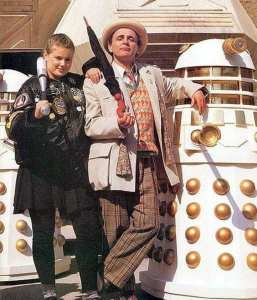
Not by much. In Remembrance of the Daleks (1988) The Daleks are back and to see the look of wonder on my son’s face as one “elevates” up some stairs to chase the Doctor and Ace was fantastic. I was 12 when I saw it, I remember that feeling of dread and breathless panic as I realised the Daleks could go up stairs! I ended up watching all the Sylvester McCoy episodes and actually enjoyed his character. His deep baritone shout and his eccentric versatility struck me as quite endearing whilst being oddly manipulative at the same time. I must admit I had a massive teenage crush on his companion, the rebellious and streetwise Ace (Sophie Aldred).
But there was still no story arc for the doctor or his companion. Ace’s character did have some very interesting elements to her story, but these never seemed to amount to anything beyond the episodes of each story. With ratings for the final season down to 4.15 million (hardly a failure, the 2023 Doctor Who Christmas special netted 4.7 million viewers), the TV series ended abruptly in 1989 and would not return again until 2005. Who knows what happened to the Doctor and Ace? Well we do. Both characters went on to feature in Doctor Who: Monthly Adventures from 1999. In 2021 the series achieved the Guinness World Record for longest ever running science fiction audio play series. Ace also returns in the 2022 episode The Power of the Doctor.
I’ve carried on watching the classic episodes, returning to Tom Baker and any episodes that feature (the increasingly hysterical) Daleks. My son sometimes joins me and sniggers at the appearance of special effects and monsters. He gleefully tells me “that is obviously a puppet, a model, someone in a costume, or that’s clearly green screen.” It makes me feel very old, and a little embarrassed, that all I can muster as a reply is a: “When I was your age, I found all this to be terrifying.”
Good storytelling is about showing, not telling. The Muppets were obviously puppets, but they always felt like real people to me. I truly believe it’s magic that enables Kermit to ride a bike. I want to believe it, so it’s true. Does everything have to be explained?
Charlie and the Chocolate Factory is a much loved classic that was thoroughly ruined by going back. The 1971 version of Willy Wonka and Chocolate Factory was rebooted with Johnny Depp in 2005. Same story, but all the Hollywood polish. The unhinged edginess of Gene Wilder’s Wonka made him one of the scariest characters of my childhood. Despite the singing and dancing, his factory had a very dark side. Some bits of the film didn’t quite make sense, but this added to the menacing atmosphere.
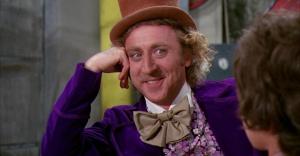
Thanks to flashbacks in the 2005 reboot, we now know that the young Mr Wonka became an eccentric confectioner trapped between childhood and adulthood because he had issues with his father and that he acquired (rescued/enslaved) the Oompa Loompas on an expedition to Africa. This pointless exposition may give the character depth but doesn’t add anything to the story. It’s telling, not showing. Maybe this is the problem with modern TV.
Do our kids lack imagination? Have we all been dazzled by Hollywood and Netflix so that everything else looks terrible? Is this why I find a lack of a story arc to be so disappointing? Is it just me getting older and telling myself that things were better when I was younger? We’re overthinking our entertainment and forgetting that the original point of it all was just to escape, feel powerful emotions and have fun.
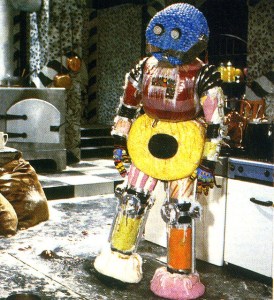
It will take me at least a couple of years watching two episodes every night five days a week to watch them all (I won’t be doing that!). I have only seen a very small selection of the middle and final “retro” episodes so far, so realise the way the episodes were written will change. The earlier episodes are still magical to me. Of course, they didn’t replicate exactly the same feelings of wonder and sheer terror for myself or my kids, but going back in time with the Doctor has given me hours of entertainment and provoked me to consider the quality of the entertainment we consume today.
Richard Brown MBE – January 2024
 World According to Me:
Every time in the past was better, or so we want
LikeLike
I’m glad you agree! Things from our past (including ourselves) were better!
LikeLike
Hi Rich,
I enjoyed that read and the mainly good memories it brought back!
LikeLike
👌
LikeLike